Sunday, March 7, 2021

Dear Mr. President

 Dear Mr. President,

I noticed you've been pretty busy again this past week, and now that you've gotten at least something through the Senate for pandemic relief you can start looking forward to future, likely non-bipartisan, fights that are already underway.  Like, for instance, the fight over voting rights, which from everything I've heard has to do with Republicans wanting to curtail the ability for minorities and normal people to vote.  I especially enjoyed the message you sent to Congress by way of your Executive Order.  I don't expect the Order will stand for long, but hopefully by the time it wends its way through the courts, our lawmakers will have decided whether voting rights are important enough to get rid of the filibuster.  That said, I think it's probably about time, since the way current filibusters work is a load of crap anyway.  Maybe they can figure out how to actually make the filibuster be what it was intended to be rather than a simple impediment to actually getting any legislating done.

That said, I do hope you'll turn your attention toward infrastructure in our country and consider a Green New Deal Works Program.  It's something I really think we need.

This coming week I'll be making use of my blog to highlight some voices that I've found that have helped me to make sense of the climate debate over the years.  I'm excited to talk about them in no small part because as our climate has begun to change, it's important that we consider those changes as we put forward new laws and new ideas for building and transportation, and a host of other issues.  I expect it's something the Department of Defense has been doing for a while now, and if they haven't, then I think we're are pretty likely screwed until they do.

There was something that caught my attention this past week, though--something that the Republicans decided to harp on, but is something that interested me more for what I learned from it than anything else.  It has to do with the fact that your administration, like many administrations before it, has decided not to release the White House call logs.

Now, at first, I had no idea if this was something new or just business as usual, and when I found out that this really isn't anything new, I was almost content to let it slide.  But hear me out here: I don't know if there was a debate around this very issue when phones were installed in the White House, though I have to imagine there were.  All that aside, things have changed since the first days of those early telephone calls.  In a lot of ways, during the pandemic, phones and video chats and the like were some of the only ways we had to communicate with one another safely.  So this prompted me to consider that perhaps we should reconsider these ages-old precedents regarding phone logs.  I don't think every call should be noted, but when someone from outside of the White House calls to discuss business that is related to the running of the country, I do think it's important that we, the people, get to know about that business--maybe not all of the specifics, of course.  But it doesn't seem fair to hide business behind a smoke-screen any longer, Mr. President.  I don't know what sharing those phone logs would entail, or how much work it would be, but I do hope that you and your staff will revisit this stance and consider setting a new precedent for future generations.  If you do manage it, I will happily await the next thing that makes Republicans irate.

I wasn't able to find your wife's appearances in full on the internet, and while I have cable, rummaging through the cable mess in order to watch the programs she's been on has been...more time consuming than it was worth in all honesty.  I hope you'll consider letting her do her own little bit on the White House Facebook page--as I've really been enjoying those little snippets from various members of your WH staff.

The call you made to an essential worker on Friday was pretty touching, though I have to wonder what her son's expression meant.  I feel as though, having watched that, that her son, like many other black Americans, probably doesn't have a very good opinion of you right now.  I can't say I know what to do about that, but it's something to consider.  I know you can't be everything to everyone, but Black America seems unwilling to trust the government in a lot of ways these days, and if we want this country to succeed, I think that's something that needs to be addressed.

I don't think we'll talk about the Cuomo stuff tonight, Sir, but I think your party really needs to sit down and have a talk with itself.  The days of the "good old boys" club is over; things are changing, and either the Democrats change with the times, or they're going to get left behind.  People make mistakes; they're not always great at their jobs.  But that doesn't mean they get to abuse their power; that's part of what causes distrust in the government--no matter what party you're in.  Maybe remind your fellow democrats that they are meant to serve as examples of what is best in our country.  Maybe if they start doing that, they'll get more respect.

I have lots of other idea floating around in my head right now, but I think I'll leave it here for this week, Mr. President.  I know you're doing the best you can, and I hope these letters are finding their way to you in some small fashion.  But even if they're not, I feel a lot better for having written them.  It helps me to focus on the things that I believe are important to me and for the country, and that, in my mind, can't be anything but good.

I'll catch you next Sunday, Sir.  Until then, I'll be looking forward to seeing your roadmap going forward--COVID-19 plans and all.


~~ Jenni

P. S.  I watched a press conference by your COVID team this last Thursday (was it?)  Anyway, it had been a while since I'd watched one of those.  And while I thought your team did a good job, I found it troubling that your team lead, Acting Administrator Slavitt felt like he wasn't willing to be honest with the reporters asking questions of him.  In some cases, it felt like he was skirting issues, and it just didn't feel good watching that.  I was impressed with Dr. Walensky, even though she sadly didn't have much of a speaking role at the conference.

All in all, I feel like many of your staffers aren't doing a good enough job of actually listening to the questions being asked of them, and often they don't actually give answers to questions that were asked.  This can lead to a lot of frustration and spark conspiracies where there likely aren't any.  So, remind them to listen, take notes of the question if they need to in order to be sure they answer it, and not to be in such a hurry to give "an" answer instead of a good, thoughtful one.

Friday, March 5, 2021

Causes to Celebrate: National Women's Law Center

It is rare when I find that laws create more empathy in the world, but very often they can.  Laws can help to mold the ideals of our society--even if they don't always live up to them in practice.  What we believe to be right isn't always just, and what is just isn't always right.  But to do nothing at all is not better than trying to get to the right things in a just way.  And sometimes that means fighting to change the status quo, or to update outdated laws and language, or to change the way we view others.

I recently read a story about a woman fighting to acquire the rights to photographs that were taken of some of her enslaved ancestors that belong to a prestigious university.  Although a judge denied her request, she is continuing the fight (via the appeals process) in the hopes that our laws may one day better reflect the humanitarian aspects of property rights of enslaved peoples.  According to our current legal standards, people who do not have the rights to negatives and actual pictures are not considered to retain the rights to them, even if they are the subject matter of them.  In accordance with our current laws, those pictures probably would belong to the picture taker's ancestors, or to the institutions or organizations they were given to.  But because her ancestors were enslaved, they wouldn't have had the right to such ownership, even though our current-day climate would allow for such.  The point being--our legal system doesn't really take into account these sorts of moral, ethical, and emotional dilemmas, and while the university and the woman might be able to come to some arrangement (it wasn't stated if that was tried first or not,) this was brought into the court systems likely to bring up a valid concern--how do we account for property and rights that should belong to the ancestors of enslaved people when those rights were not available to those same ancestors during their own lifetimes?  It is why the idea of restitution is often brought up, and it is understandable that people should want to be able to lay claim to items and properties that would legally have been theirs if their family hadn't at one time been enslaved or had their rights abridged by laws that are no longer valid.

But I digress.  I wanted to bring up this idea of laws and legislation, because I believe these are powerful tools that enable us as a society to say what is important to us.  And while the legalese may be a bit wordy for many of us, the ideas that are espoused by those laws are important because they shape how we think and how we act.

One group that strives to work toward reshaping our society for the better is the National Women's Law Center.  They are on the forefront of many legal fights for women here in the United States, and they lobby for legislation that will further empower women to have an equal say and equal pay that is comparable to what their male counterparts have.

Their work began in 1972 and has grown in scope since then.  Back then, they wanted better pay, and better working conditions, and while there have been many advances since then, we are essentially still fighting the same battles in 2021 as we did back then.  We're still working to ensure that women get the same educational opportunities as men.  We're still fighting for our bodies--both in caring for them and in ensuring that we're not being exploited or treated in a demeaning manner.  We're still fighting for access to things like tampons, pads, and birth control--which a lot of poorer families can't always afford or provide for their children and themselves.  We're still looking for equal pay for equal amounts of work, and we're often still striving to be seen as people rather than what we're wearing, how we smell, or how we appear physically.  And often, women are punished for the bad behaviors of men--such as shaming what we wear as just cause for sexual harassment or rape.

Every day there are new stories about allegations of sexual harassment in the news.  And I don't have to look very hard to find studies proving that male and female salaries are not and have not been comparable to one another.  There are fights going on about abortion rights, and access to health care--things that men have that women don't, and are often being legislated by largely male-dominated legislatures.

I said it yesterday: inclusion is important.  And I am glad that women are finally standing up and being heard these days, but even still, we are treated as though we are complaining about nothing.  We're told that we should just put on our big girl pants and move on.  But doing that doesn't change the things that are wrong, and doing that doesn't heal the wounds that these behaviors can create.  Here in the United States, women make up slightly over half the population of the country, but you'd be hard-pressed to guess that from the makeups of many of our companies, and don't look too closely at our state and national legislative bodies.

And so that is why we need organizations like the National Women's Law Center--people who are fighting to create an egalitarian system in which we all have the same rights and are considered to hold the same value as one another--regardless of our sex.  But they also understand that women have different needs from men--especially when it comes to health care, and ensuring those needs are met is part of that egalitarian vision.  And that is why I believe the National Women's Law Center is a cause worth celebrating.

I want to add one last thing here about the power of words.  I've been thinking about this a lot lately, and it strikes me that we don't really talk enough about this.  I grew up in an era where the prevailing wisdom was: sticks and stones may break my bones, but words will never hurt me.  And while that's a nice platitude about not letting others get to you, it fails to capture the real harm that words can have in the world--especially in this day and age.

There are so many studies about the ways in which our thoughts are shaped by the languages that we speak, and if that doesn't convince you that words have real power, then ask someone who has ever been a PoW or a soldier what freedom means.  Speak to a black man or woman about what freedom means to them.

Funnily enough, I was reading an article about Hong Kong the other day.  It was talking about how many pro-democracy advocates were leaving Facebook because of the censorship they saw happening around and after the election.  They were switching to platforms like MeWe, which has less censorship and moderation overall.  The interesting thing about that is that here in America, MeWe has become a platform of the far-right--often seen as being more authoritarian in nature, and less democratically inclined (wanting to disenfranchise certain people of the vote, for instance.)  People here in America flocked to MeWe because they also didn't like Facebook's censorship.  That two completely different groups with differing concerns about censorship share the same platform, but would likely be ideologically opposed if they were in the same country, tells me that our views and ideas are shaped by our societies and our experiences.  And so even ideas that may seem similar have different connotations throughout the world.

That is how important words are--not just because they convey ideas, but because they allow us to share those ideas with others--both the good and the bad.  And so I think it is important to consider the words we use in our lives--to understand them in as many contexts as we can, and to seek to do the most good we can with them when we can.  That is something all this week's causes to celebrate are, hopefully, doing.

Thursday, March 4, 2021

Causes to Celebrate: Black Lives Matter Global Network Foundation, Inc.

Why is it, nearly 57 years after the Civil Rights Act of 1964, we find it so hard to say simply and without rancor, "Black lives matter."?  That's barely three generations of people ago--less than a hundred years.  For kids born today, that's their great-grandparents, their grandparents, and their parents.  There are people alive today who lived during a time of segregation--or whose parents lived during a time when they were oppressed and told "Your life isn't as important as mine."  And while we can say that slavery ended in 1864 with the ratification of the Thirteenth Amendment, black men and women here in America often weren't treated as equals--a hundred years before the Civil Rights Act would finally say "no more."  No more are black people to be seen as different from white people.  No more can people denigrate another person based on the color of their skin.  Or their religion.  Or their sexuality.  And yet, in spite of those hard-won words, 57 years later, we're still trying to pretend that because there's a law, people will have just magically changed.

I wrote in an earlier post that when we say "Black Lives Matter" we're not saying that other lives don't matter.  What we're saying is that for a long time, and still today, black people are being told that they are somehow less than other people.  We've enacted seemingly color-blind laws that disproportionately affect black and lower-income communities in negative ways.  We've cemented wealth in the hands of mostly white men in this country through adverse tax and banking laws.  We still see racial profiling in our algorithms meant to do exactly the opposite of that.  Every day, I can find a new story somewhere in the world where our societies are creating systems that create problems for black people.  Even just this past weekend at the Golden Globes we were confronted with the knowledge that there isn't a single black man or woman as part of the Hollywood Foreign Press Association.

Inclusion matters.  It is important.  It allows us to see and to know different points of view than our own.  It invites us to understand other ways of looking at the world.  And instead of seeking to embrace that, we are often dismissive of it.  And that is why there are groups out there like Black Lives Matter Global Network.

I keep remembering this quote that I read about Whoopi Goldberg and Star Trek when I think about the power of inclusion in our lives:

"Well, when I was nine years old Star Trek came on," Goldberg says. "I looked at it and I went screaming through the house, 'Come here, mum, everybody, come quick, come quick, there's a black lady on television and she ain't no maid!' I knew right then and there I could be anything I wanted to be."

To me, that is a supremely powerful statement, and her success is a direct result of the Civil Rights Act of 1964.  That and shows like Star Trek that included so many different skin tones and ethnicities, and while it may have had its white, male lead, it still stands as a testament to many black men and women of today about the possibilities that are available to them and to their children and their children's children.

 Black Lives Matter Global Network understands that there is still work to be done in this world for all those whose skin tone is noted as black.  They understand that there are still people today who look at black people and see them as being inferior in some way, and that this is something endemic to our American culture and way of life.  And they believe, as we all should, that this is something that shouldn't be so.

Here is what they say, in their own words, they stand for:

Black Lives Matter Global Network Foundation, Inc. is a global organization in the US, UK, and Canada, whose mission is to eradicate white supremacy and build local power to intervene in violence inflicted on Black communities by the state and vigilantes. By combating and countering acts of violence, creating space for Black imagination and innovation, and centering Black joy, we are winning immediate improvements in our lives.

We are expansive. We are a collective of liberators who believe in an inclusive and spacious movement. We also believe that in order to win and bring as many people with us along the way, we must move beyond the narrow nationalism that is all too prevalent in Black communities. We must ensure we are building a movement that brings all of us to the front.

We affirm the lives of Black queer and trans folks, disabled folks, undocumented folks, folks with records, women, and all Black lives along the gender spectrum. Our network centers those who have been marginalized within Black liberation movements.

We are working for a world where Black lives are no longer systematically targeted for demise.

We affirm our humanity, our contributions to this society, and our resilience in the face of deadly oppression.

The call for Black lives to matter is a rallying cry for ALL Black lives striving for liberation.

Although I've said it, I want to leave you with the words of former President Barak Obama--a black man speaking on behalf of the nation, about what it means when people say "Black Lives Matter."

"I think that the reason that the organizers used the phrase Black Lives Matter was not because they were suggesting that no one else's lives matter ... rather what they were suggesting was there is a specific problem that is happening in the African American community that's not happening in other communities."

Fifty-seven years after the Civil Rights Act of 1964, I believe it is important that we continue to affirm that Black Lives Matter.  Because it's obvious that our actions aren't showing it, and our laws aren't magically ensuring that this is the case.  And that is why, today, I believe Black Lives Matter Gloval Network Foundation, Inc. is a cause worth celebrating.

Wednesday, March 3, 2021

Causes to Celebrate: DigDeep

When I decided to make this month a month of causes that I felt were important to support, I had no idea of  the journey that I would be taking.  I have projects that I absolutely want to share with you, but I wanted to emphasize certain things during each of the weeks of March.  This first week, I wanted to highlight projects that deal with racial equity.  A lot of lower income, black, and Latinx communities are at a disadvantage when it comes to opportunities.  During the pandemic I read story after story about food deserts in nominally black neighborhoods.  I learned a lot about mutual aid societies, and I was grateful that I didn't need to know those things to survive.  But if I were in a different situation--and one that isn't so difficult to imagine, I might well have been relying on that information just to make it through the day.

The amount of insecurity in this country is staggering--food insecurity, water insecurity, health insecurity, housing insecurity, emergency fund insecurity, education and educational resources insecurity....  For a place that touts itself as a land of plenty, there is a lot of famine to be found.  And while I am heartened when I read stories about people elevating themselves out of these situations, it makes me rather angry to know that this stuff still exists in the year 2021.

When I was a kid, I believed that we'd have tackled some of these issues and made them better by now, but when I look around now, some forty years later and find myself confronting the same problems and the same inequities as back then, I have to wonder if the way we're running our  societies is somehow flawed and wrong.  So when I came upon this charity and read what they had to say, I knew that I needed to make sure it was included during this week's Causes to Celebrate.


DigDeep is a non-profit dedicated to bringing running water to the people of America.  They believe in finding solutions to our water problems, and they did the research to not only prove that there was a problem, but also offered us the means by which to fix it.  Let me just share a few quotes from their page here:
Black and Latinx households are twice as likely as white households to lack indoor plumbing.

Federal funding for water is only 14% of what it was in 1977.

Native American households are 19 times more likely than white households to lack indoor plumbing.

The number of people without water access recently increased in Delaware, Idaho, Kansas, New Hampshire, Nevada, South Dakota, and Puerto Rico.

More than 2.2 million Americans still don’t have running water or basic plumbing, like a flush toilet. 44 million more don’t have clean water that’s safe to drink.

Their latest report was concluded in 2019 and has been posted on their site.

It is staggering to me that the things I take for granted every day--running water from my sink and bathtub, water to flush the toilet, to wash my clothes, and to clean my dishes; is something that people here in America still go without.  I've donated to charities committed to bringing water to other countries like Africa, but DigDeep's assertions hit me pretty hard.

I watched one of their videos about the 4 liter challenge, and I have to say that the idea of trying to live on only 4 liters of water every day seems daunting.  That there are people in this country having to do that every day--not just for one day, leaves me feeling dispirited.  No one should have to live without running water, but especially not here in America.  And so that is why, today, I am celebrating DigDeep's mission to bring running water to every home here in America (whatever home may be.)

Tuesday, March 2, 2021

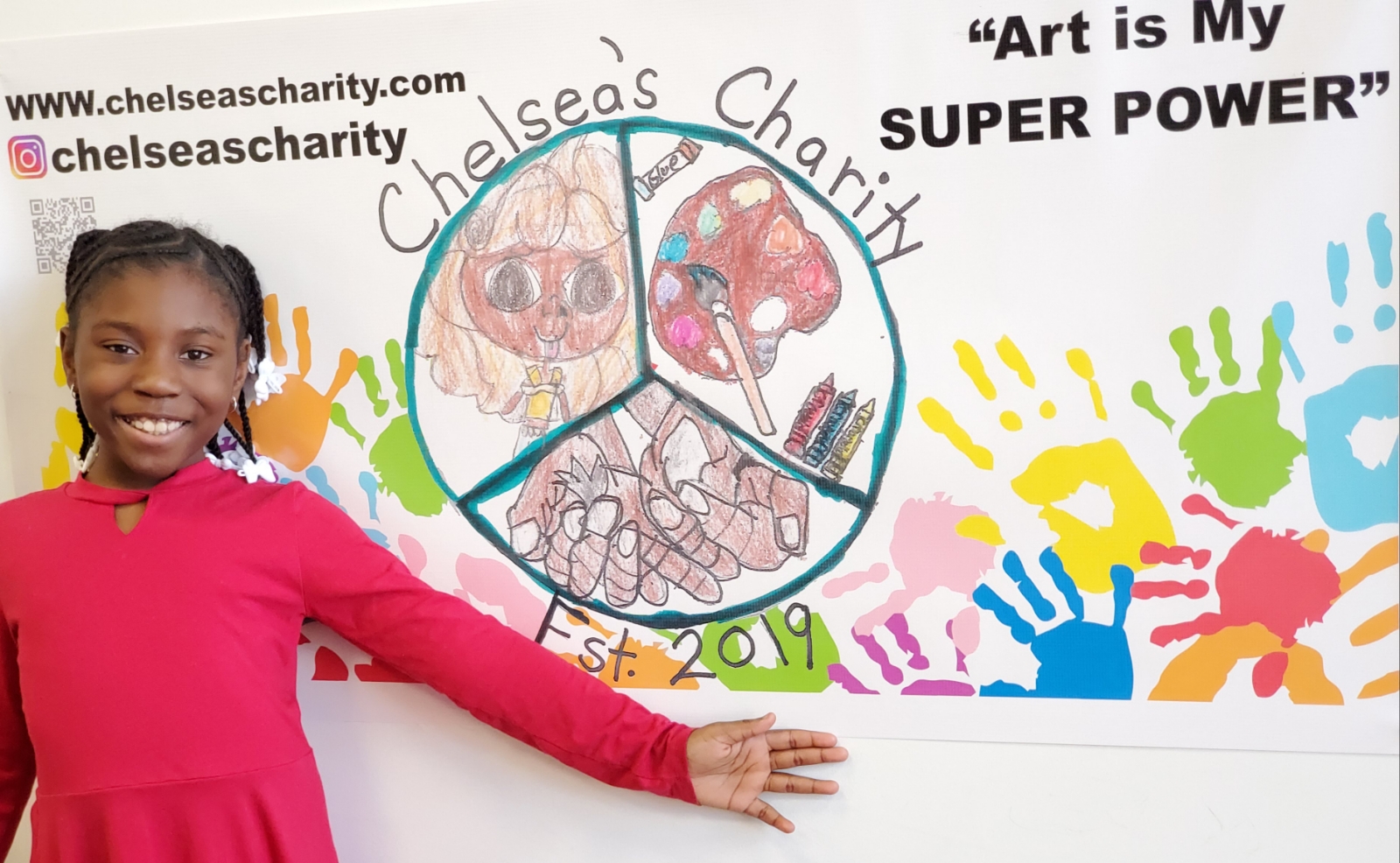
Causes to Celebrate: Chelsea's Charity

I featured Chelsea Phaire during Black History Month reading Nikki Giovanni's "BLK History Month." In finding her video, I also found out that she has created a charity called Chelsea's Charity that creates and gives art kits to all different kinds of causes--from art classes in schools to veterans from veteran's aid groups and hospitals.  She's even looking to expand her work to children and causes around the world, currently working to send kits to Haiti.

It all started when she asked guests to her birthday party to donate art supplies for those in need of them rather than bringing gifts, and thus began this wonderful journey to help bring art to communities in need.  To Chelsea art is a way of healing and bringing people together; it's a way to express ourselves, and it gives us a sense of accomplishment when we complete our creative endeavors.  And I believe she's right.  But often not having materials to create art can stifle that means of self-expression; and so, she is looking to make sure that these materials are available for those in need of them.  How cool is that?

With my own birthday coming up, I find it compelling that this young woman has chosen to create a whole charity from an idea that started on her birthday.  While I don't think I'll be starting any charities on my birthday (at least not this year,) being able to share and celebrate in Chelsea's work is something I want to do.  And that is why I chose to feature her this month.

There are some quotes that she placed on her charity page that I really love:

“Art Should Be Available For Everyone!"- Chelsea's Charity 

"Every child is an artist. The problem is how to remain an artist once he grows up." - Pablo Picasso

"I dream my painting and I paint my dream." -Vincent Willem van Gogh 

Please consider checking out her charity page and passing this message on to teachers or groups that might benefit from something like this.

Art really can be a powerful tool for healing.  My own step-dad spent a lot of time working through some of the effects of the Vietnam War where he served as a Marine with art, and I can't wait to share with you some of his work in a future month.  I have never asked if it helped him, but I do believe that it allowed him to find some truths and some healing for the things he saw and experienced during wartime.  I believe it changed him in a profound way, and while it's harder for him to do art these days as he's older and his hands aren't as steady nor do they work as easily as they once did, he still does a Christmas card each year which my family sends out to our friends and family to celebrate the season.

So I have seen in my own life the power of art, and I believe it is a cause worth celebrating.  

Monday, March 1, 2021

Causes to Celebrate: Get Lit

I don't remember where I was or what I was doing that brought this organization to my attention, but I jotted down a note several days later intending to go back and take a look at it sometime last month.  That, of course, didn't happen.  But I was so intrigued by the idea of a youth poetry program that involved spoken word poems and offered a venue for learning about poetry that today I finally got a chance to settle down and take a look at Get Lit.

There were so many high points and then a few low points as I realized that the program is only offered here in Southern California, though the curriculum is available for purchase so that schools and teachers in other states can use it.  But what an amazing way to not only promote literacy, but also to teach invaluable skills while doing so.

Get Lit is a vehicle for enabling kids to find their own voice in the world.  The curriculum appears to offer students the chance to learn poetry and then also to perform it.  And it brings the spoken word of poems back into the classroom.  I remember one of my high school English teachers bringing in a record to play us some of Robert Frost's poems, and hearing them spoken aloud, rather than just reading them on the page, leant those words new life and new meanings to me.  Had I known then that there were opportunities to speak and perform poems back then, I imagine I might have done just that.

Thinking on that makes me wonder just how much we as parents, educators, and mentors can miss out on these kinds of programs and opportunities for kids.  I often wonder how teachers and school counselors manage to keep up with everything that's available out there.  I expect there are plenty of organizations out there that help with this, but if you're a  grades 4-12 drama, English, or arts teacher, or if you know someone who is, I hope you'll consider sending them this way.  

Now, from everything I'm seeing, this is not a cheap program, but I don't actually see the prices listed anywhere on their site or elsewhere.  I did check out their book on Amazon, however, and it was $11ish dollars just for the Kindle version.  So yeah, without some serious support from the school district, parents, or private donations, you're going to likely be unable to afford the school program on your own.

BUT, it does look like most of the youth programs they have available online don't cost anything for kids to join and be a part of; so, for those homeschooling their kids, this might be worth the time and effort of looking into to see if it's something worthwhile.

From every review that I've seen so far, there is no one who is dissatisfied with the program, and while I am skeptical of that (surely -someone- must have had a bad experience somewhere, right?) ...what I have seen and heard so far leads me to believe that Get Lit is the real deal.  Just looking through their current staff and board members, I find myself incredibly daunted by the sheer amount of creative talent working for the organization.

All the rest aside, though, this is something that I wish were everywhere and existed for every child.  The ability to meet with, read through, and talk about diverse ideas and cultural norms other than our own is so powerful, and the fact that this group exists to do not just that, but also to educate and inspire kids to read and find their own voices is phenomenal.

And that is why I chose to make them my first "Causes to Celebrate" post this month.  I hope you'll consider sharing this.

The video below is from their Facebook page, and I see it as a testament to their desire to inspire hope--not just in the lives of the children they teach, but also in the rest of us as we listen and see the vision and voices of future generations.